HOA Violations Management: Track Cases Without Inbox Chaos
Date published: July 27, 2026
Author: Kelly Fansler, Founder HOAResidents
HOA violations management on HOAResidents.com: promote resident reports or create board cases, track open through closed status, assign owners, attach evidence, and keep follow-up on one message thread.
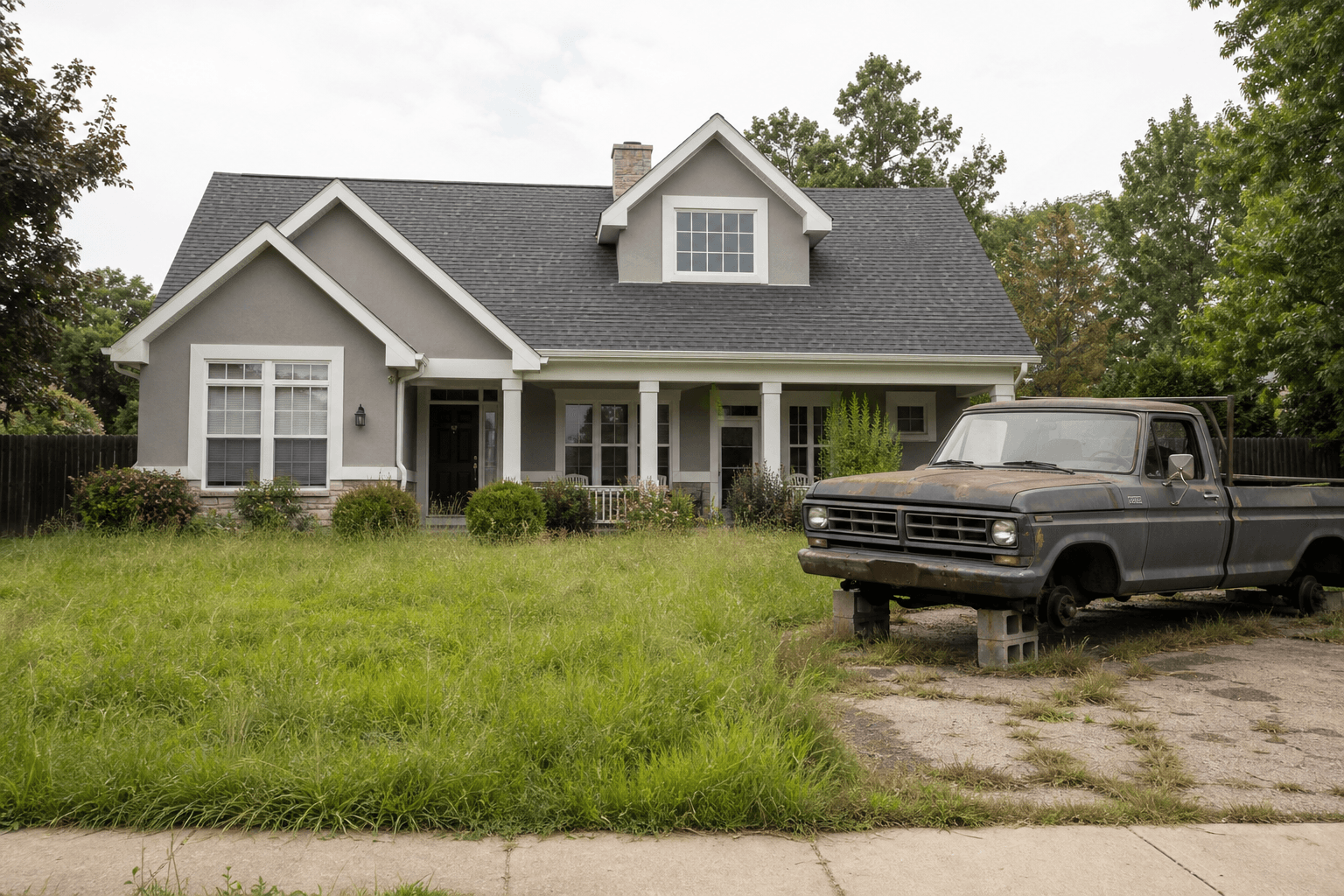
Parking complaints, noise reports, and landscaping notices still arrive the same way in too many communities: a text to the president, a forward to the treasurer, a sticky note after the board meeting. By the time someone asks “what happened with that car on Oak Street?”, nobody shares the same story — or the same status.
That is the job of HOA violations management: turn informal reports into formal cases the whole board can track, without rebuilding the history from personal inboxes. On HOAResidents.com, violations sit next to your shared board inbox so intake, follow-up, and resolution stay connected.
What HOAResidents.com gives volunteer boards
HOAResidents.com includes a dedicated Pro violations management workflow. Boards promote a resident report into a case, or open a case when someone calls or a board member notices an issue on a walkthrough. Every case has a clear status path, optional assignment and notes, room for evidence, and a link back to the message thread so follow-up does not start from scratch.
You are not buying a separate enforcement product. Violations live in the same portal where you already talk to residents.
Option 1: Promote a resident violation report
Residents can use Contact HOA with a Report a violation topic. When the report belongs in a formal record — not just a one-off reply — the board promotes that thread into a violation case with one action. The conversation stays attached, so notices, questions, and replies do not scatter across Gmail drafts.
Use this path when the homeowner (or neighbor) already started the paper trail in the portal. Promotion keeps intake and enforcement on the same thread.
Option 2: Create a board-started violation case
Not every case begins as a portal message. Someone calls about a fire-lane blockage. A director sees a landscaping issue on Saturday. The board can create a case directly — property, issue details, and ownership — without waiting for a resident to submit a form.
That option matters for consistency. Enforcement should not depend on whether the first report arrived by email, phone, or observation.
Option 3: Track the case queue with clear statuses
Once a case exists, the board works a shared queue instead of a spreadsheet. Status moves through open, investigating, resolved, and closed, with history so handoffs stay honest when volunteers rotate.
Filters and actionable navigation badges surface open and investigating items so quiet weeks do not become forgotten cases. Search helps when you need a property, subject, or resident email — not “which email folder was that in?”
Option 4: Assign an owner, add notes, set a resolution date
Good violations management is ownership, not just a list. Assign a board member, keep internal notes the resident does not see, and record a resolution date when compliance is confirmed. The next volunteer can see what was tried without reconstructing a month of texts.
Option 5: Attach evidence to the case
Photos and documents belong on the case — not in a personal camera roll that walks off the board with the last secretary. Upload evidence to the violation record so notices, follow-up, and (if needed) escalation share the same file trail.
Option 6: Keep follow-up on the linked message thread
Every case stays tied to its resident message thread. Replies, clarifications, and “we’re closing this out” notes stay in one place. You do not open a second channel and lose the chronology that made the case fair.
What residents see vs what the board owns
Residents report issues and continue the conversation. The board owns case status, assignment, and resolution. Homeowners do not manage the enforcement queue — that keeps process consistent while still giving them a clear channel to raise concerns.
Common scenarios fit the same options: parking and vehicle issues, noise and nuisance complaints, and landscaping or exterior standards under your CC&Rs. The workflow is the same; the issue type and evidence change.
Try HOA violations management on HOAResidents.com
HOA violations management is a Pro capability. HOAResidents.com is free through January 2028, and founding communities lock in Pro features at Core pricing afterward — as low as $20/month per 100 homes. See violations management, explore the shared board inbox, or review pricing and the founding rate lock.
In the product
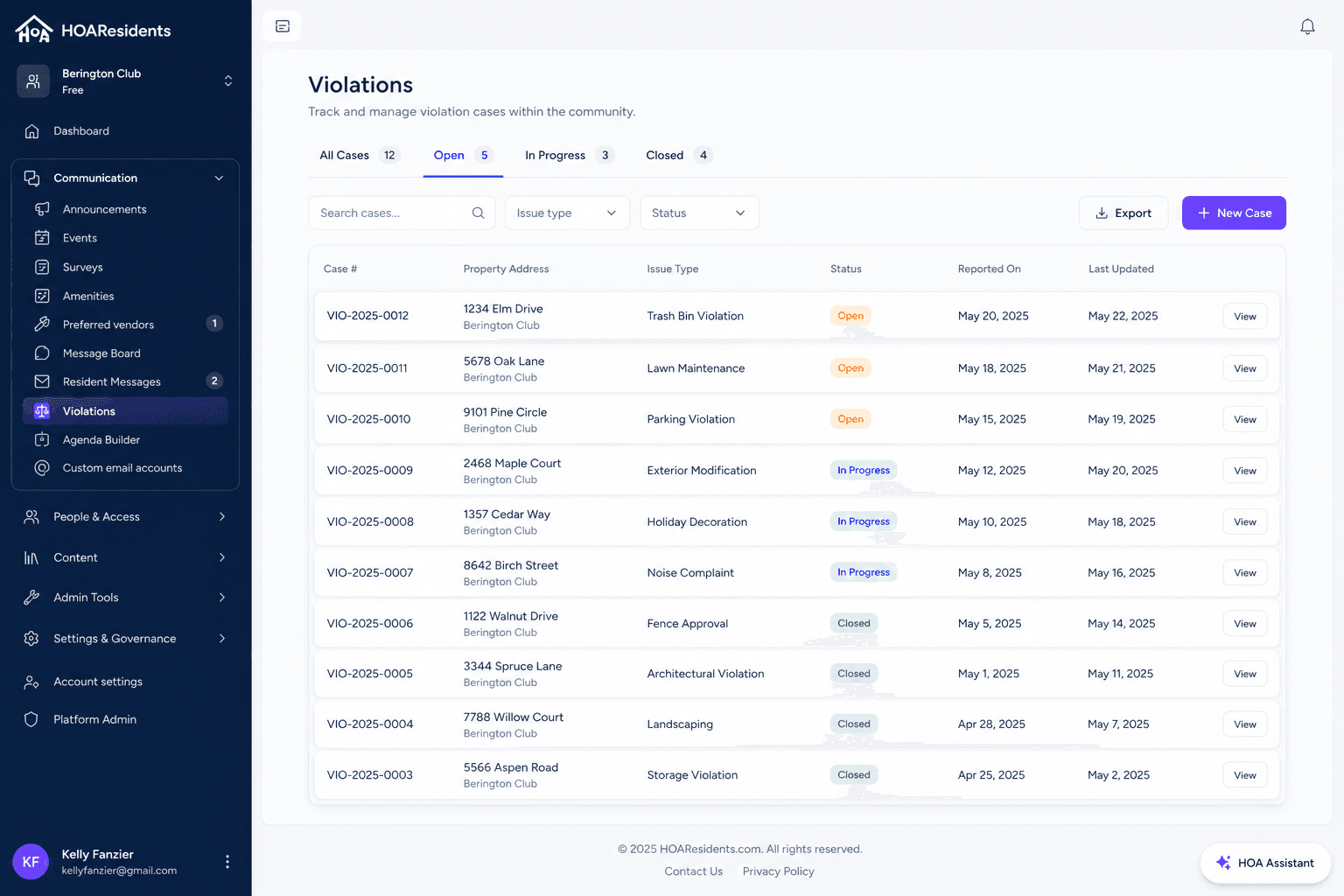
Case queue: track formal violation cases in one place instead of spreadsheets and scattered email. 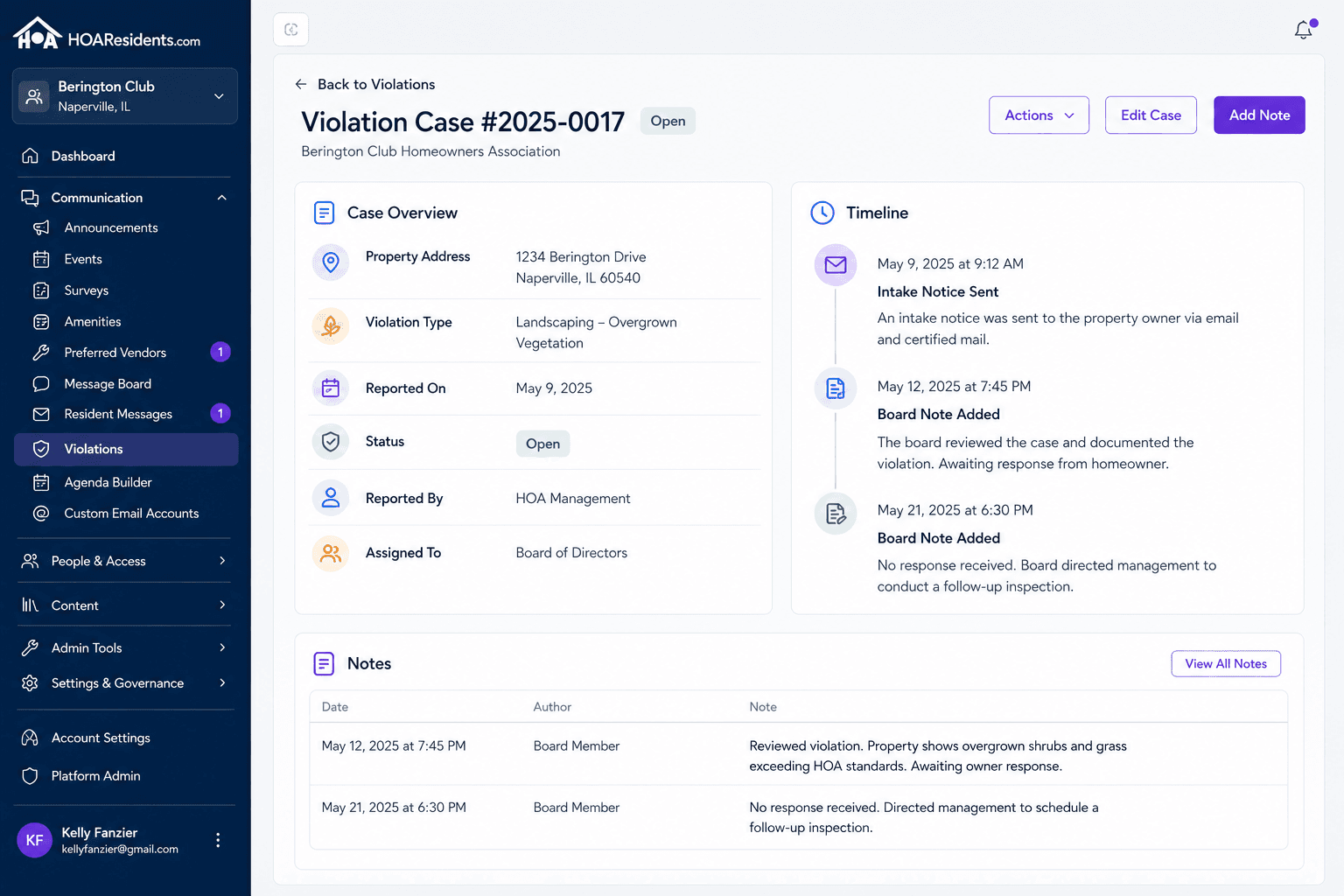
Case detail: assignment, notes, and status history so board handoffs stay clear. 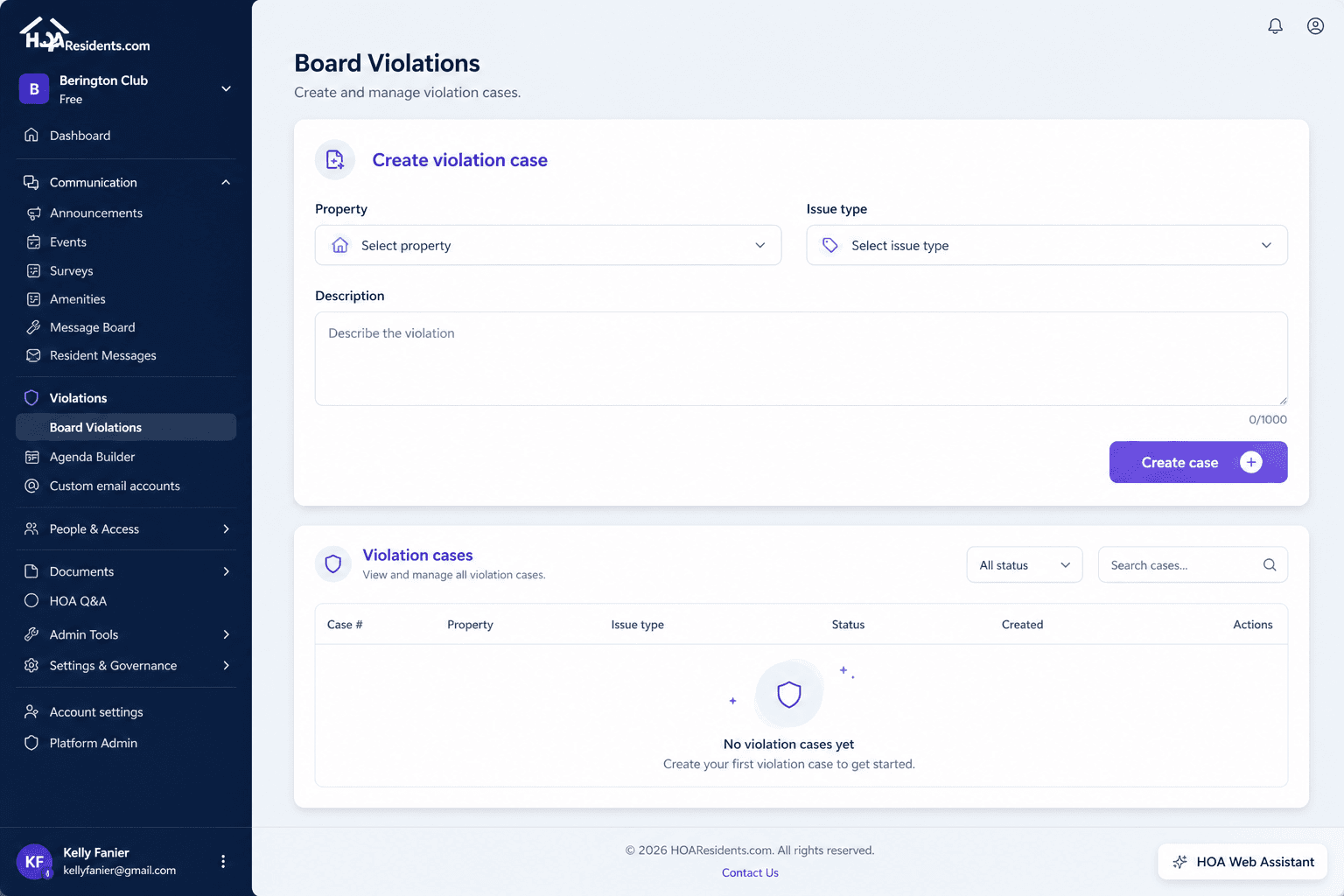
Board-started cases: open a case from a phone report or walkthrough without waiting for a portal submission.